
Weakest Links in Space: On the Voluntary Provision of Public Goods in Overlapping Neighborhoods
In this seminar we investigate the voluntary provision of weakest-link public goods in a novel spatial setting inspired by important applications. Subjects interact in overlapping neighborhoods. We investigate how endowment heterogeneity and the spatial distribution of endowments around a circle affect the final provision of the public good.
We find that the detrimental effects of endowment heterogeneity arise specifically when endowment types are clustered, but not when high and low types alternate. In all settings, players provide in-kind transfers only within their own neighborhood.
Replacing direct transfers by an intermediary common account to improve transfer coordination does not increase average weakest-link public good provision, but can decrease inequality depending on the spatial clustering of endowments in space.
About the lecturer:
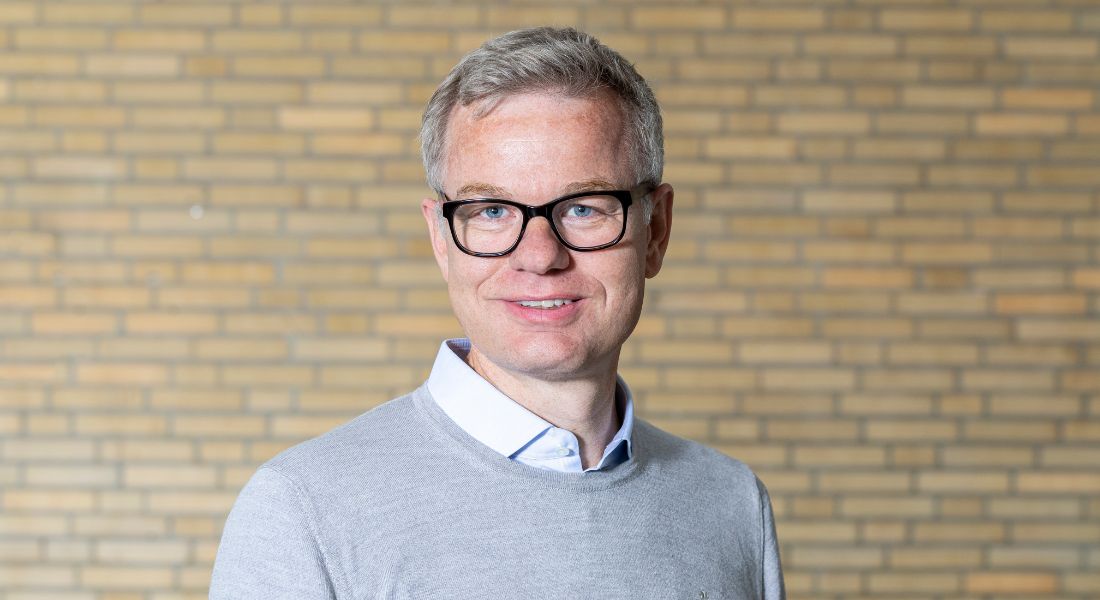
Andreas Lange is Full Professor of Economics at University of Hamburg. His research includes theoretical, experimental, and applied work on issues in public and environmental economics as well as in behavioral economics. For example, he’s conducted studies on international environmental agreements, on emissions trading systems, and on policy decisions under risk and uncertainty.
Much of his current research focuses on prosocial preferences and the voluntary provision of public goods. His work has been published in journals such as American Economic Review, Quarterly Journal of Economics, and Journal of Public Economics. Andreas currently serves as Co-Editor-in-Chief at Journal of Environmental Economics and Management.
How to participate
The seminar is open to all
Time: 1 May 2026, 12:00-13:30
Place: Auditorium Von Langen, Rolighedsvej 23, 1958 Frederiksberg C