
Professor
Henrik Meilby
Department of Food and Resource Economics
University of Copenhagen
We aim to promote socially just, climate-resilient livelihoods and nature conservation in the Rufiji Delta, Tanzania. We approach this goal through research on the interaction between mangrove ecosystems, local communities’ livelihoods, and changes in climate and socio-political conditions.
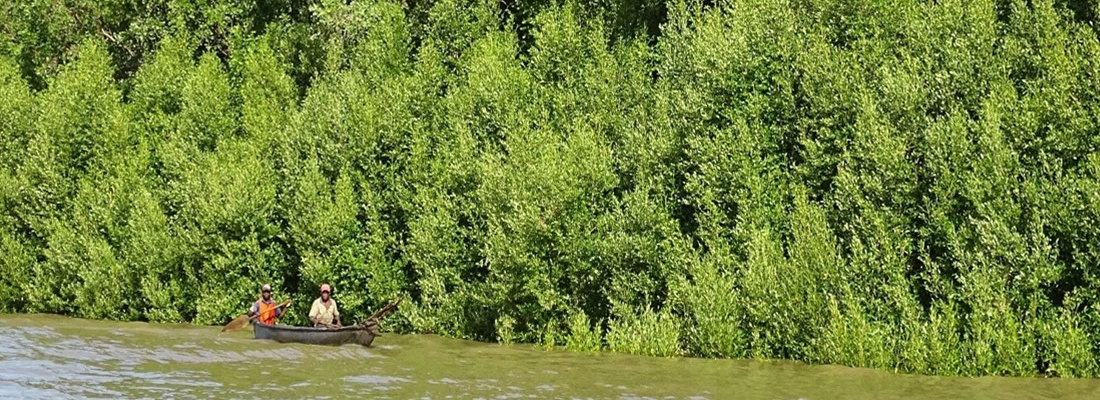
Through empirical research in the Rufiji Delta we anticipate that this five-year research capacity development project will generate new knowledge on the resilience of communities and ecosystems towards impacts of climate change, conservation programmes, and development projects. We also expect to generate new knowledge on the experiences, agency and response expressed by local people.
Specifically, we expect to identify challenges and opportunities in relation to equitable and sustainable governance, climate change resilience and sustainable management of mangrove forests. We also expect to create attention to these matters locally, nationally, and regionally.
The ∆Rufiji project examines how socially just, climate-resilient local livelihoods and nature conservation can be achieved in the Rufiji Delta, Tanzania.
To this end, the project focuses on three main aspects:
The project is implemented in collaboration between the University of Dar es Salaam, Sokoine University of Agriculture and University of Copenhagen and involves the training of three PhD students and two postdocs.
You can find the full ∆Rufiji project description here (pdf).
In work package 1, we examine the growth and regeneration capacity of mangrove forest in the Rufiji Delta. Furthermore, we aim to understand the rate and causes of deforestation and forest degradation in the area.
In work package 2, we examine how changes in climate and biophysical and socio-political conditions affect local livelihoods in the Rufiji Delta, and what the implications are in relation to agency, risk and resilience.
In work package 3, we examine the perceived impacts of management and conservation initiatives, what the socio-ecological responses are, and what institutional arrangements might promote socially just, climate resilient livelihoods and nature conservation.
| Name | Title | |
|---|---|---|
| Search in Name | Search in Title | |
| Henrik Meilby | Professor |
|
| Sofie Mortensen | External |
|
| Thorsten Treue | Associate Professor |
|